
Last fall, EAHS was approached by Marie White, Economic Development and Cultural Heritage Coordinator for Rideau Lakes Township, to contribute to the Agrarian Magazine, an on-line Canadian family publication that was running a series of articles on rural school experiences. Two members of the EAHS Board responded to the request. Printed here are articles by Bill Murray and Mary Carty highlighting the “special times” that were to be enjoyed from receiving a one room school education.
Life in a One-Room Rural School Circa 1950
By Bill Murray
(This article appeared in the Elgin and Area Heritage Society Summer 2026 Newsletter)
Starting in 1953, from Grade 1 through Grade 7, I spent my days at Pine Grove School, a little wooden building surrounded by majestic pine and maple trees; a world isolated from the surrounding community while classes were in session.
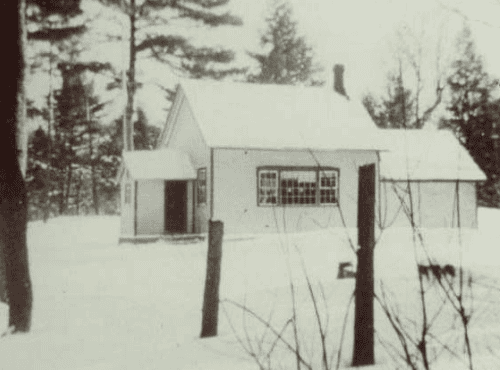
We had no means of communicating with anyone. No phone was available to call anywhere. A dug well provided water for all to drink; a pail served as our drinking fountain. As I recall the water bucket was never washed, only rinsed out as need be, prior to the bucket being refilled with fresh water.
Two outside toilets, one on either side of the yard, provided washroom facilities; the challenges were many – no running water, coping with cold winter visits and, in the case of the boy’s bathroom, a door that could never be locked, day or night. With such easy access, creatures of the forest, especially porcupines, delighted in chewing up the wooden seats; sadly, young gentlemen users were often afflicted with splinters in their behind.
Students spent recess and noon hour outside. The teacher would, periodically, come out to see that everyone was playing properly, whatever that was. Playground equipment consisted of a bat and a ball; we fashioned a diamond – one of the tall pine trees served as first base. Other games were invented as people tired of playing the same thing.
“Anti-I-Over” was a common playground activity. Two teams were formed taking positions, one on each side of the school. A soft ball was tossed over the roof of the school allowing the waiting team to catch it. Keeping the ball well hidden, the receiving team ran around the school to capture new players from the other team by tagging them with the ball. Because the yard was divided into a boys’ and a girls’ side, the game was allowed to continue as long as no one remained on the wrong side too long.
Every December, we held a Christmas Concert at the Women’s Institute Hall in Chaffey’s Lock. For several weeks prior, practices took place each day in the school; during the final two weeks, at least two rehearsals were held in the hall. We would walk the two miles to the hall in the afternoon, practice and then be picked up by the bus at 4 o’clock. Complaints about the cold or snow were few as we walked along that highway with our teacher in charge. Our itinerant music teacher, Kathryn Scott, a resident of Elgin, visited us once a week. She assisted us with the concert’s musical selections, as well as any dancing numbers in the program. I was not very fond of Mrs. Scott; when she was picking students for the dance numbers, she would often choose me first. She told me that I was her first choice because my father had been a good dancer when he was young.
As previously mentioned, Pine Grove School was a wooden structure having an enclosed porch entranceway at the front and a woodshed attached to the back of the building. Each spring a new load of wood would be delivered to the school; students would dutifully carry the wood into the shed for the winter. Behind the teachers desk was a wood box extending conveniently out into the woodshed. This allowed wood to be loaded into the box through to the schoolroom eliminating many a chilly, wintery trek outside each time the stove needed a new block of wood.
The schoolroom itself had very high ceilings covered with a metal roof into which a pattern had been stamped. Our desks were bench seats, originally, which held two students. This sometimes posed a problem if one person had more books and scribblers than their space would hold. Our texts were not current; I recall a grey-shaded geography book with a publication year of 1929. It was an exciting event for us when we received a hectograph worksheet. Since our teachers had no photocopier or ditto machines, the hectograph was the only means of making multiple copies of student worksheets. It was a special honour to be chosen to help make the copies. Usually, it entailed pulling the long sheets of paper off a jelly like substance which had been prepared by the teacher in a long flat pan resembling my mother’s cookie sheet.
Did we miss anything in our educational experience at Pine Grove School? No …. I don’t think we did. Do I wish it had been different? Certainly not! Looking back on my educational experience at Pine Grove School, I can’t but admire the teacher who was given the job of educating, nurturing and looking after the safety of students with eight different levels of maturity. They had an unenviable task to say the least. I know that after having taught all elementary grade levels for over 30 years in Kent County, I was very fortunate to have been able to learn in the one room school environment.
A Special Dancy School Christmas Concert
By Mary Carty
(This article appeared in the Elgin and Area Heritage Society Summer 2026 Newsletter)
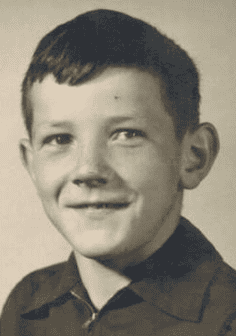
My brother Mike, a grade one student at Dancy School, fondly related this story of his early 1950’s experience of the school’s annual Christmas Concert.
As he tells it, one day in the bleak, gray days of late November, his teacher, Miss Mainse, (soon to be Mrs. Vivian Perrin) announced to her pupils that it was time for them all to begin to prepare for the coming Christmas Concert.
Much excitement filled the air; everyone always looked forward to this yearly event. This particular year, Miss Mainse added to their anticipation by surprising them all when she indicated that they would hold the concert in the evening, not in the afternoon which had always been the practice, as of course, there were no electrical lights in the building.
In the days ahead, though many expressed their doubts about this ambitious plan, Mike included, Miss Mainse held her silence continuing to insist that the plan would be successful. The big day arrived and all was prepared for the show: play lines and poetry recitations were learned, Christmas carols were practiced to perfection, costumes were finished, the bedsheet curtains were hung and props were in place; even extra seating was provided by spreading planks across wooden blocks to form benches. But ….. still no sign of how things would possibly go on despite the darkness that evening. Amazement greeted the cast and audience when they arrived to a well-lit schoolhouse with six large gas lanterns safely hung from the ceiling.
Needless to say, everyone, Miss Mainse, students, parents, older siblings, grandparents and neighbours alike had an especially enjoyable pre-Christmas celebration that year. The evening performance enabled so many more community members to attend and share in the holiday gala.
The “man of the hour” was Miss Mainse’s fiancé, Frank Perrin, who, with a few construction buddies, had installed the lighting late that afternoon. Years after, in conversation with Vivian, Mike expressed to her how all the students saw her boyfriend as a great hero for the gift he had given to them that evening. In return, Vivian revealed to Mike that the lighting was not Frank’s only contribution to the occasion – he also filled in as Santa Claus.